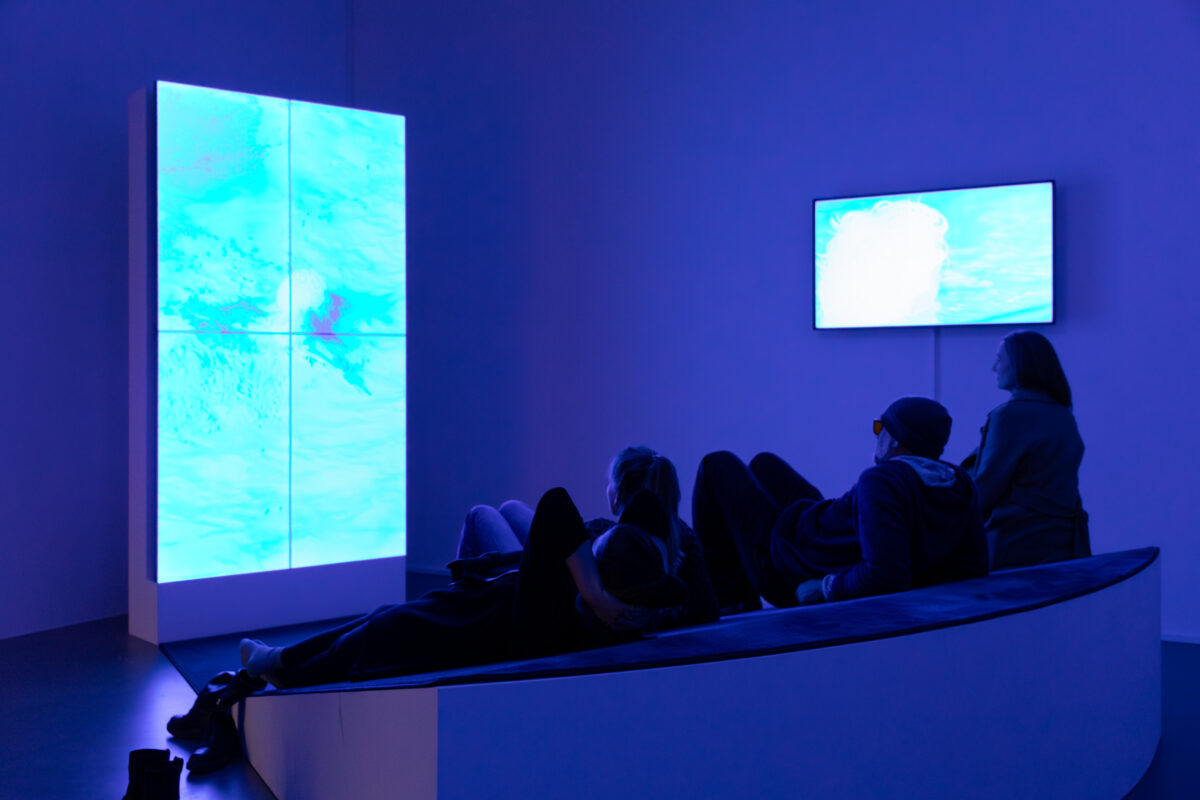
More Light
Video in Art
More Light was created thanks to close collaboration between the Aargauer Kunsthaus, the Solothurn Art Museum and Videocompany. The result: a comprehensive exhibition about video in art – and the power of cooperation.
 i
i
Video in der Kunst
31.1. – 25.5.2026, Aargauer Kunsthaus
Alexander Hahn (*1954), The Dead. Taylor Mead, 2013
© 2026, ProLitteris, Zürich Foto: ullmann.photography
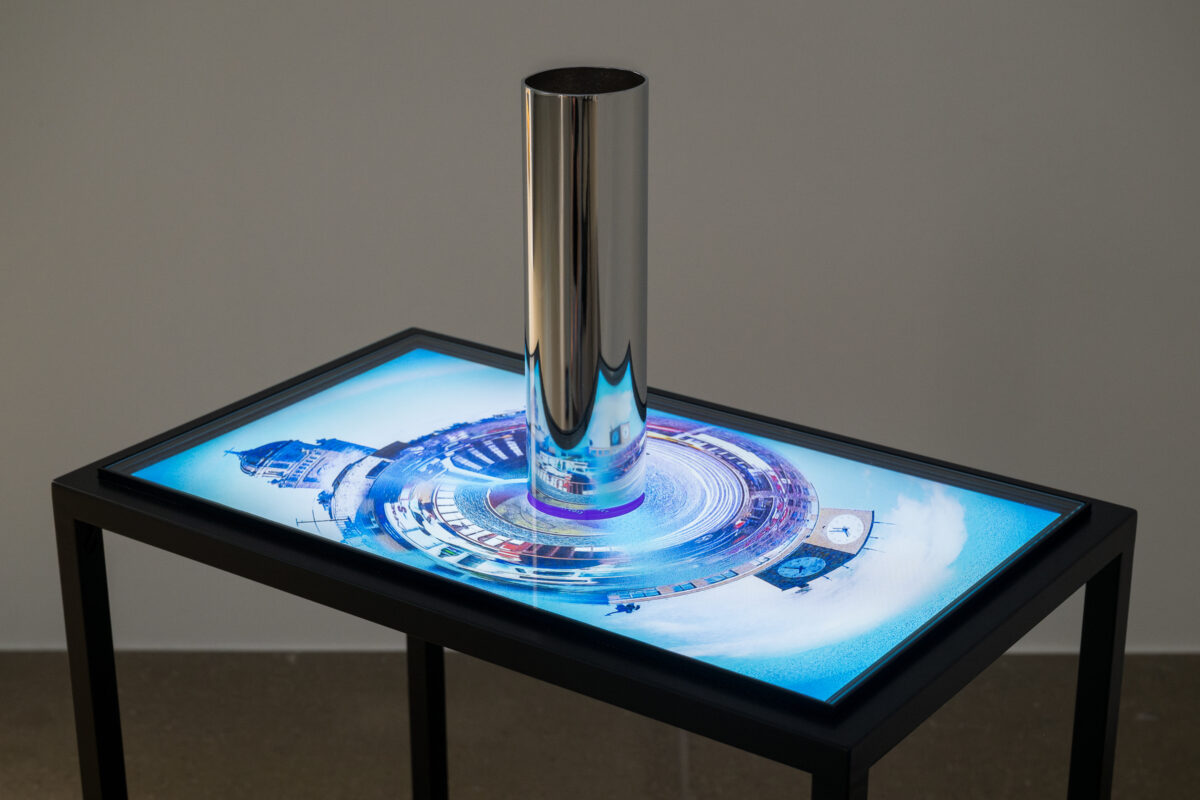
More Light is the name of the current exhibition at the Aargauer Kunsthaus and the Kunstmuseum Solothurn. ‘More light!’ is what the 82-year-old Goethe is said to have uttered on his deathbed. Whether he wanted to see the last rays of sunshine in his darkened room before closing his eyes forever, or – as we would particularly like to believe – wished posterity more enlightenment, while taking the great enlightenment of the Enlightenment with him to the grave, is something that researchers do not know. We are left in the dark. Not so the exhibition in question. It brings ‘More light!’ and illuminates a corner that is not quite so well lit: video in art. The moving image is in the spotlight here, from its beginnings to the present day. And it is doing so in two venues at the same time, curated by a team of six.
 i
i
Foto: Luca Klett, Zürich
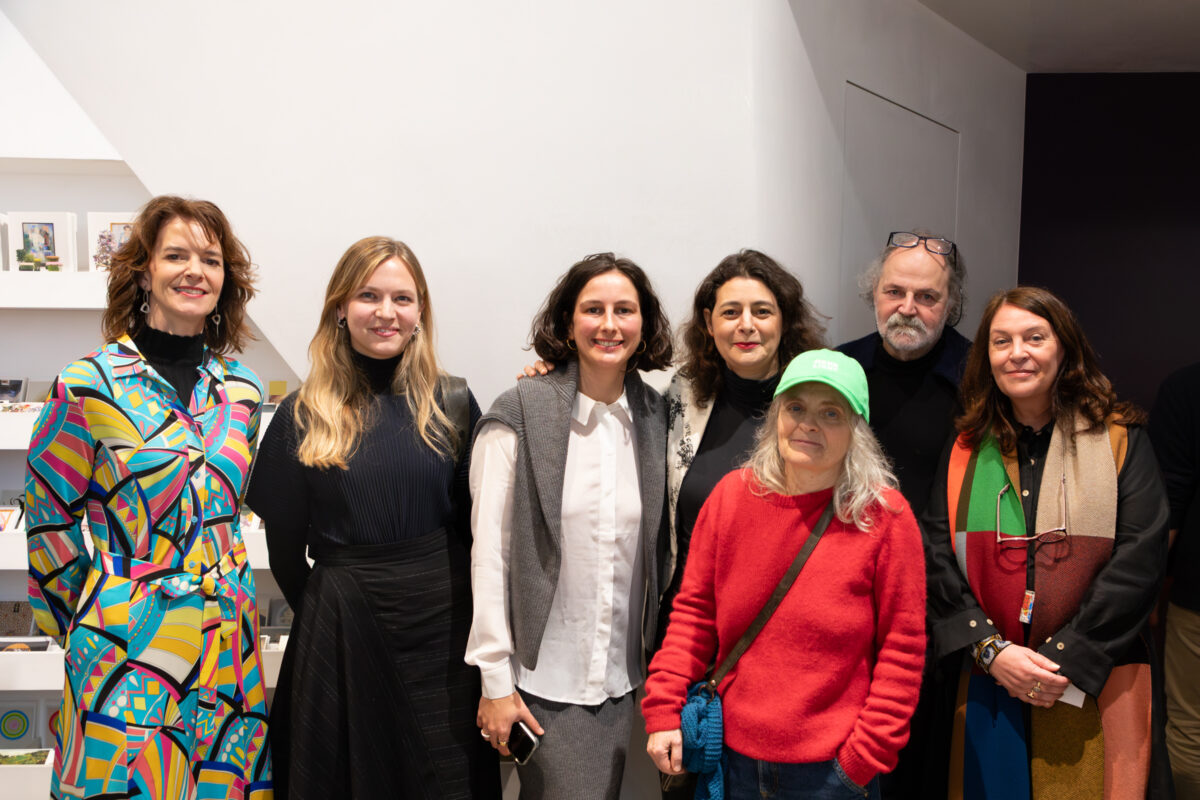
It all began when both the Aargauer Kunsthaus and the Kunstmuseum Solothurn reviewed the video works in their collections – both in close collaboration with Videocompany in Zofingen, which is responsible for the technology and production. ‘We know both institutions well and can look back on many years of collaboration with each of them,’ says Karin Wegmüller, managing director of Videocompany and co-curator of the exhibition. The differences between the two institutions are striking, from their architecture and size to their history. Accordingly, Videocompany’s approach to collaboration is unique and individual in each case.
‘For cooperation in such an undertaking to succeed, everyone must be willing to work together beyond their structural and other limitations.’
Karin Wegmüller, Videocompany
This willingness was beyond doubt from the outset. ‘We at Videocompany bring our own point of view to the table. We focus on what the work has to offer, we know the artists personally and think in terms of the work itself. If a work doesn’t fit into the space, we don’t show it,’ says Karin Wegmüller. ‘Diversity is our maxim.’ And what is particularly worth seeing? ‘The interaction between the different works. Dieter Roth, for example, with Nam June Paik. I have a strong connection to both of them, and seeing them together in an exhibition is unique in my eyes.’ She has known many of the exhibited works since their creation, with all their peculiarities and challenges.
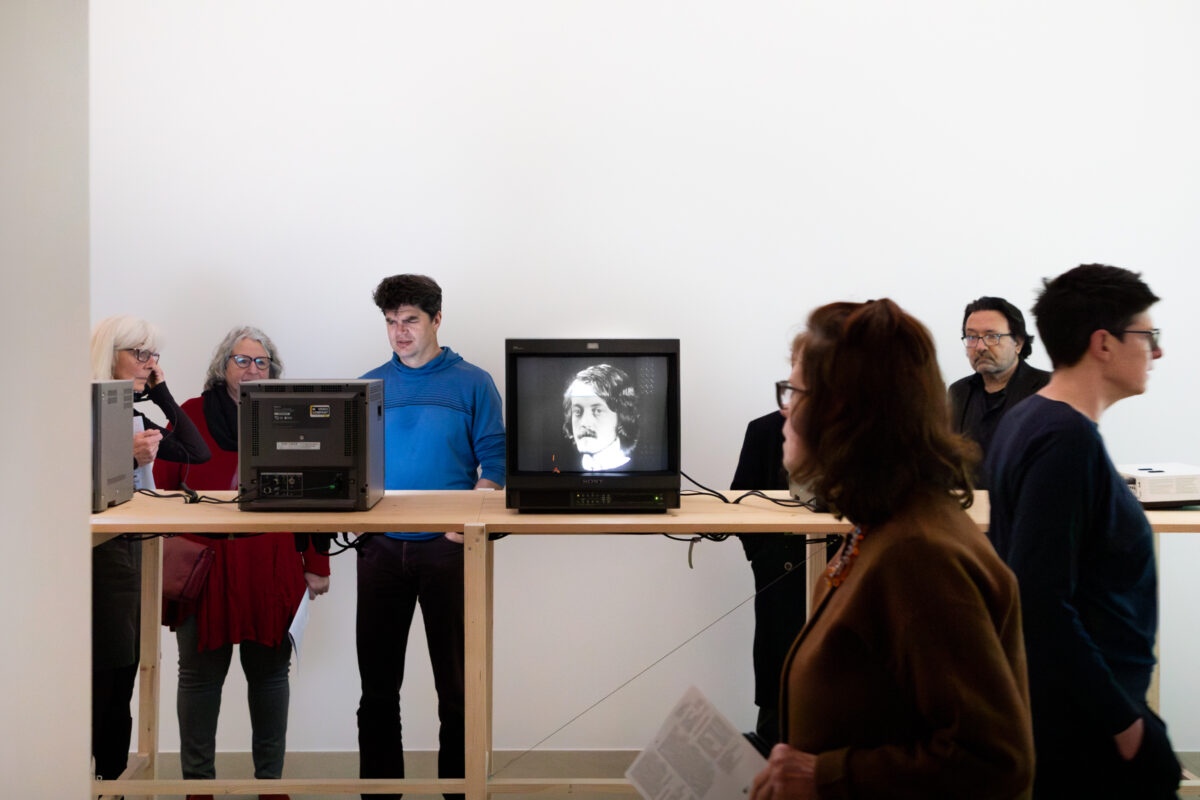
‘When I look at the exhibition, I also look back on my own history.’
Karin Wegmüller, Videocompany
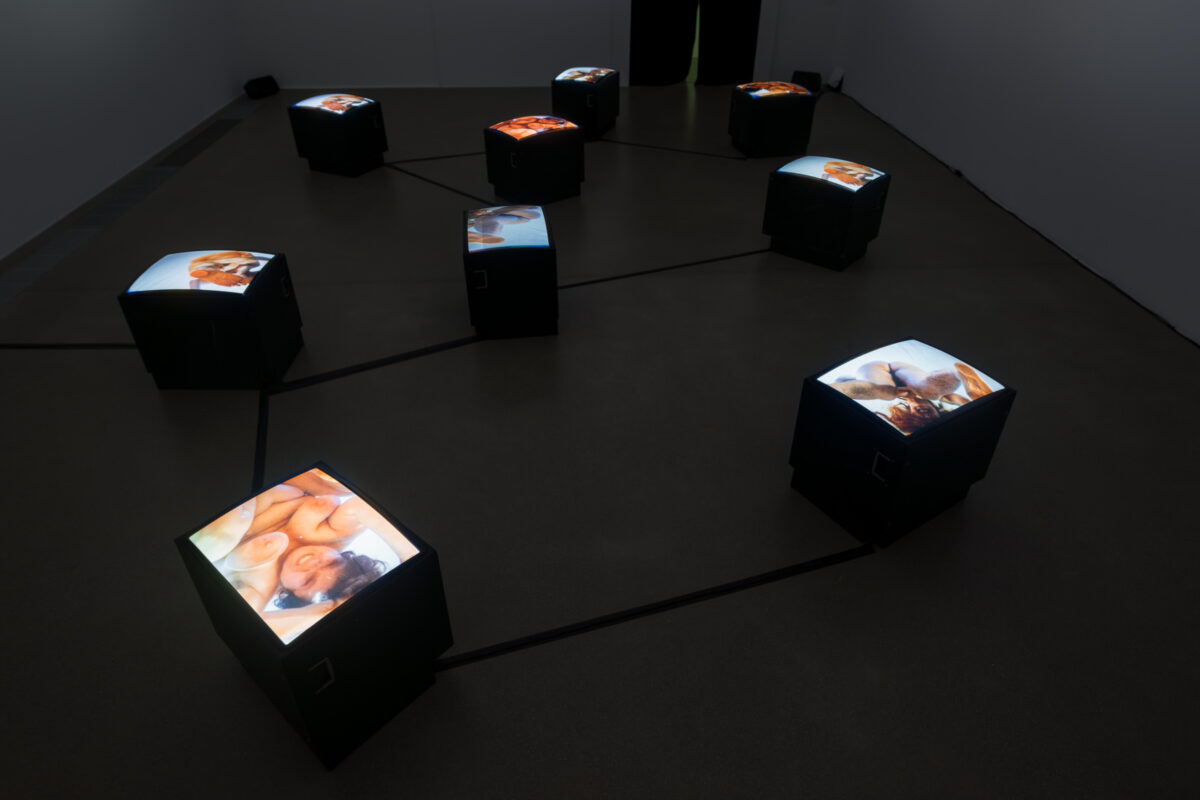
This began around 40 years ago, when Karin Wegmüller and Aufdi Aufdermauer started producing videos for artists such as Rémy Zaugg, Dieter Meier, Roman Signer and Pipilotti Rist. It is precisely this practical proximity to the creation of the works that co-curator Tessa Prati, research assistant at the Aargauer Kunsthaus, sees as a great opportunity. ‘Thanks to Videocompany’s in-depth knowledge, it was possible to re-create works for the exhibition in line with the artists’ intentions,’ she says. Babette, for example. The work by Fränzi Madörin (born 1963), Muda Mathis (born 1959) and Sus Zwick (born 1950), created in 1996, is one that remains unforgettable. The mantric chant ‘Où est Babette’ seems to go on forever, echoing even days later. The woman herself is the subject, her role in society. Coffee cups, cracked eggs and breadcrumbs spin around on the screens. Everything spins. It’s all about breakfast. As an example, of course, in the sense of pars pro toto. The transitions between sequences are smooth. But the scenes that follow are anything but gentle. Naked women yell and scream at the camera lying on the floor in front of them on nine screens. We see them from below, as if they were in a cage, as if they wanted to break out, predators behind bars. Then flames flare up, embers, glistening. Then flames flare up, embers, glistening. A witches’ dance? Once again we see the women, this time dressed. And at some point, after blurred nature shots, emptiness. The woman has disappeared, dissolved. What remains: voices asking in a singsong voice: Where is Babette?
 i
i
Video in der Kunst
31.1. – 25.5.2026, Aargauer Kunsthaus
Fränzi Madörin (*1963), Muda Mathis (*1959) und Sus Zwick (*1950), Babette, 1996
Foto: ullmann.photography
‘Cooperation enables a different kind of immersion. Constructive discussion is essential. After all, more minds mean more ideas.’
Tessa Prati, research assistant at the Aargauer Kunsthaus
What did she discover during the preparations? ‘The technology behind the videos. We are confronted with videos every day. But there is so much more to a work of art than you might imagine.’ Video opens up many possibilities for artistic expression, which have continued to evolve throughout the history of the medium. ‘Self-staging is a strong element in video art, as is the staging of the body. Temporality plays a major role – and then there is the element of spatiality, in which the audience is part of it,’ says Prati.
 i
i
Video in der Kunst
31.1. – 25.5.2026, Aargauer Kunsthaus
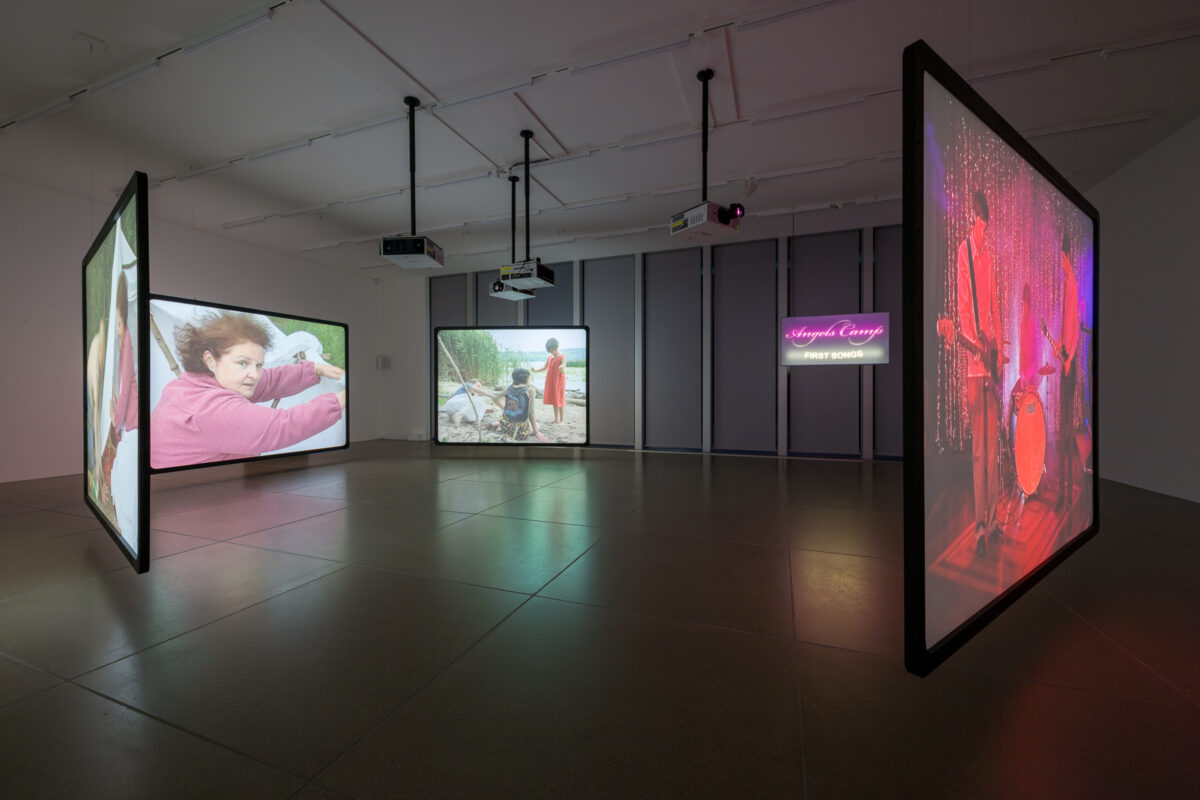
Emmanuelle Antille, Angels Camp – First Songs, 2003/2004
Foto: ullmann.photography
This is evident in the exhibition through several examples, one of which is Angels Camp by Emmanuelle Antille (born 1972), which was shown in the Swiss Pavilion at the Venice Biennale in 2003. Filling the space, even monumental, it is presented on four large projection screens. We observe, waiting for the images to draw us into the story. As the images begin, we too begin to move. Standing still is not an option. We walk between the projection surfaces, looking intently at them and also behind them, searching with our eyes to piece together the story that unfolds here in fragments and in different narrative strands. The only constant is Angels Camp, a light box with pink lettering. At some point, we realise that we have already seen the images, and we leave the room feeling slightly depressed. The immersive situation has changed our perception. A little pause would now do some of the viewers good. We realise that video is not only a visual medium; it also appeals to the ear as well as the eye, and is capable of completely captivating and engaging us.
 i
i
Video in der Kunst
18.1.–17.5.26, Kunstmuseum Solothurn
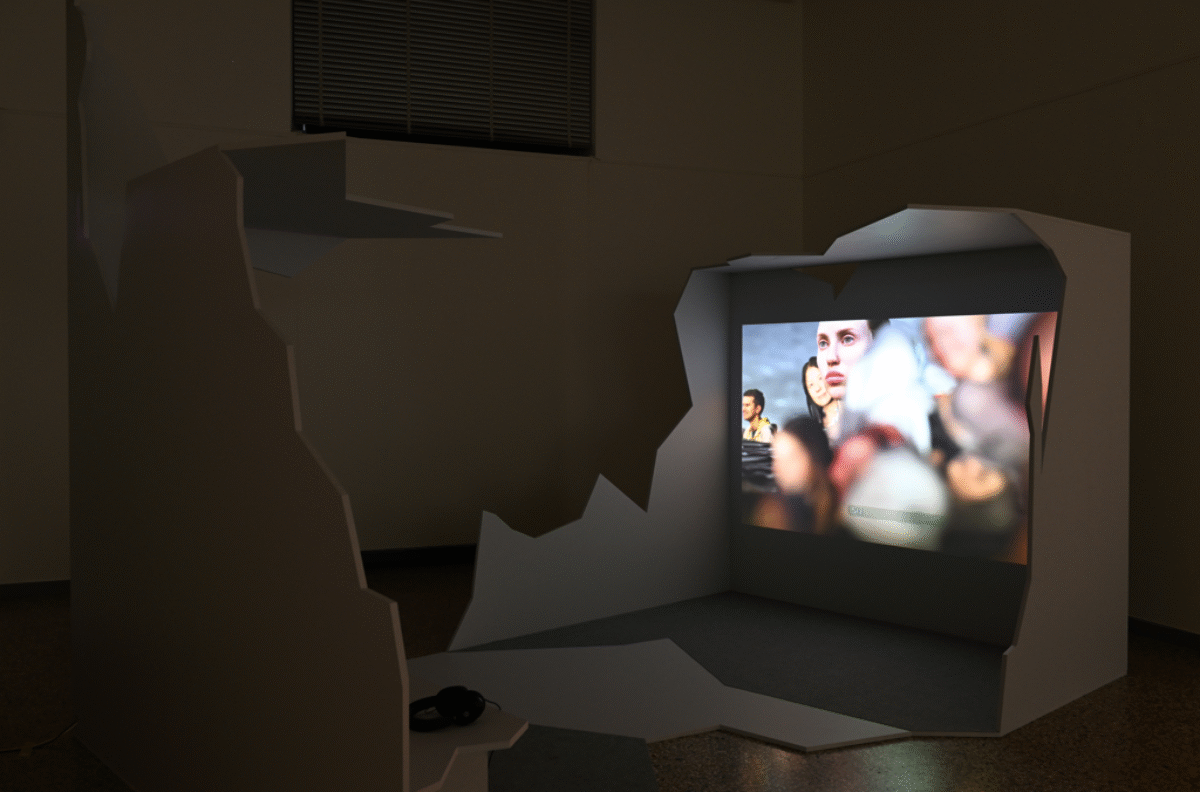
collectif_fact (Annelore Schneider (*1979) & Claude Piguet (*1977), White Shadow, 2021
Foto: Sebastian Verdon
The exhibition is rich and dense. And it shows – perhaps in a unique way – the development of a medium against the backdrop of technical possibilities. This was important to Aufdi Aufdermauer, co-curator and co-founder of Videocompany, as was the participatory approach. ‘We deliberately curated the exhibition together in both venues and we also made the decisions together.’ It is clear that this is time-consuming and requires discussion. The added value?
 i
i
Video in der Kunst
31.1. – 25.5.2026, Aargauer Kunsthaus
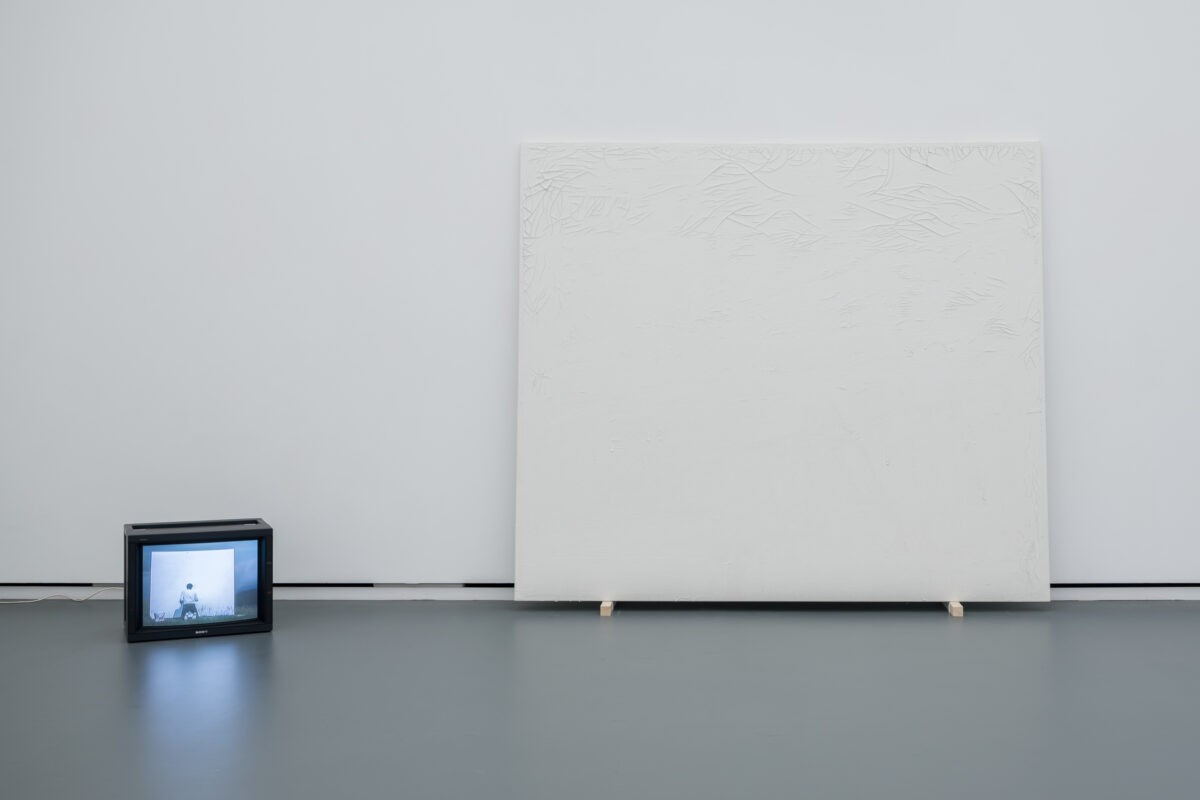
Remi Zaugg (1943–2005), 8 Stunden weiss, 1988
Foto: ullmann.photography
‘By working together, we can show much more. In greater detail. And bring to light many things that would otherwise remain hidden.’
Aufdi Aufdermauer, Videocompany
Perhaps there are even works among them that can be seen for the last time in the exhibition – partly because technology is advancing so rapidly. Aufdi Aufdermauer knows what he is talking about. Even today, some works pose a technical challenge for exhibitors. Videocompany is equipped for this and has the know-how.
‘Overall, the exhibition reflects a period in time; it shows what has been happening in video art throughout Switzerland. Visitors will discover things they didn’t know or see in a new light. Who has ever sat on the big sofa from Pipilotti Rist’s (*1962) Das Zimmer? Now you can in Solothurn.’ Aufdi Aufdermauer likes to break down silo thinking and build bridges. He was a driving force behind the collaboration between the two institutions, which are only about 50 kilometres apart. Of course, one of the goals was also to increase reach and attract a larger audience. It is no coincidence that works from the other institution’s collection are now on display in both venues.
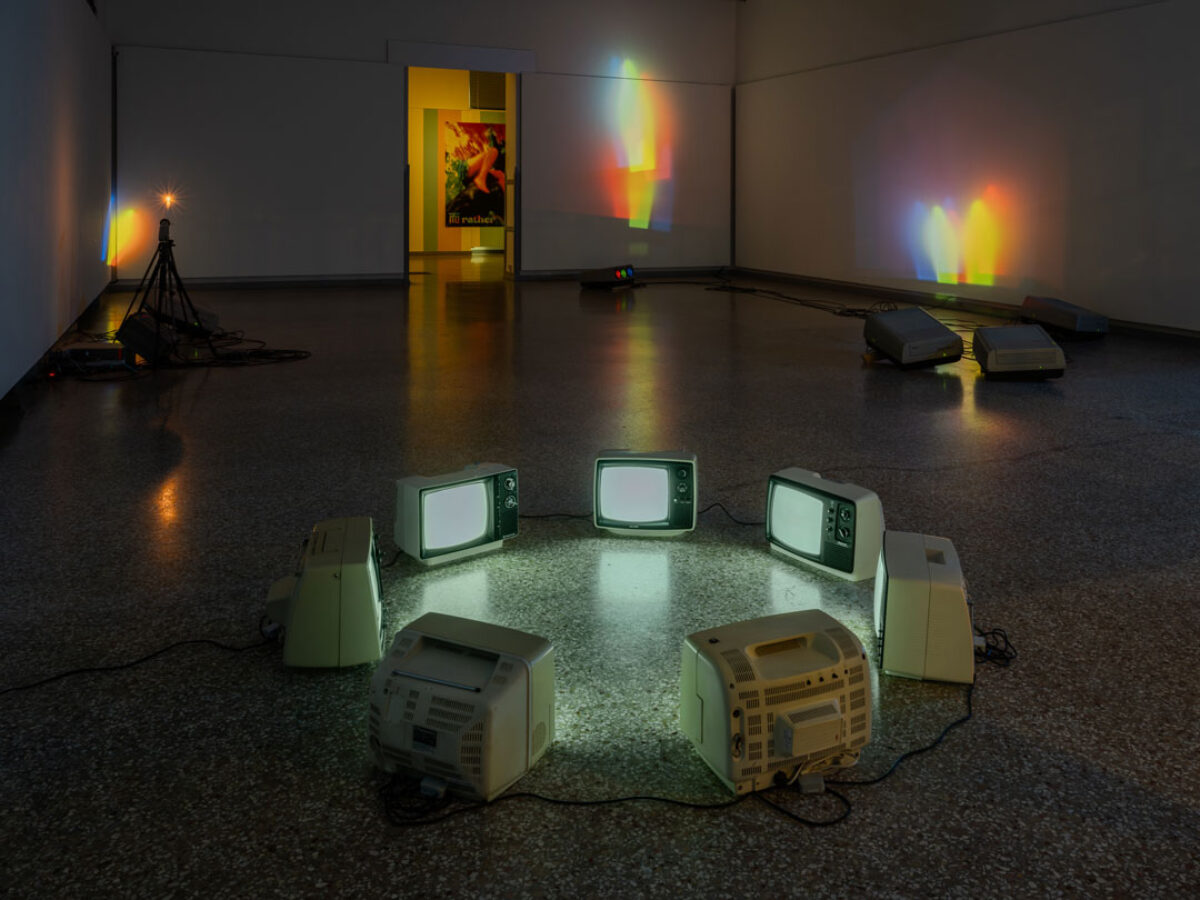 i
i
Video in der Kunst
18.1.–17.5.26, Kunstmuseum Solothurn
Foto: Sebastian Verdon
‘We wanted to create spaces of possibility together, where the transformation of the medium would also be visible, whether with works from our own collections or with loans directly from the artists themselves, as well as from public and private collections.’
Katrin Steffen, Director of the Kunstmuseum Solothurn
‘Each exhibition works on its own. But if you visit both, you will recognise references and subtle connections. As if the works were calling out to each other, the two venues become echo chambers for each other,’ says Katrin Steffen, Director of the Kunstmuseum Solothurn and co-curator. For example, Solothurn is showing not only one of Dieter Roth’s first works, but also his last – while Aarau has installed an extremely prominent piece, A Diary, which Roth created in 1982 for the Swiss pavilion at the Venice Biennale. Nam June Paik (1932–2006), a key figure in international video art, kicks off the exhibition in both venues.
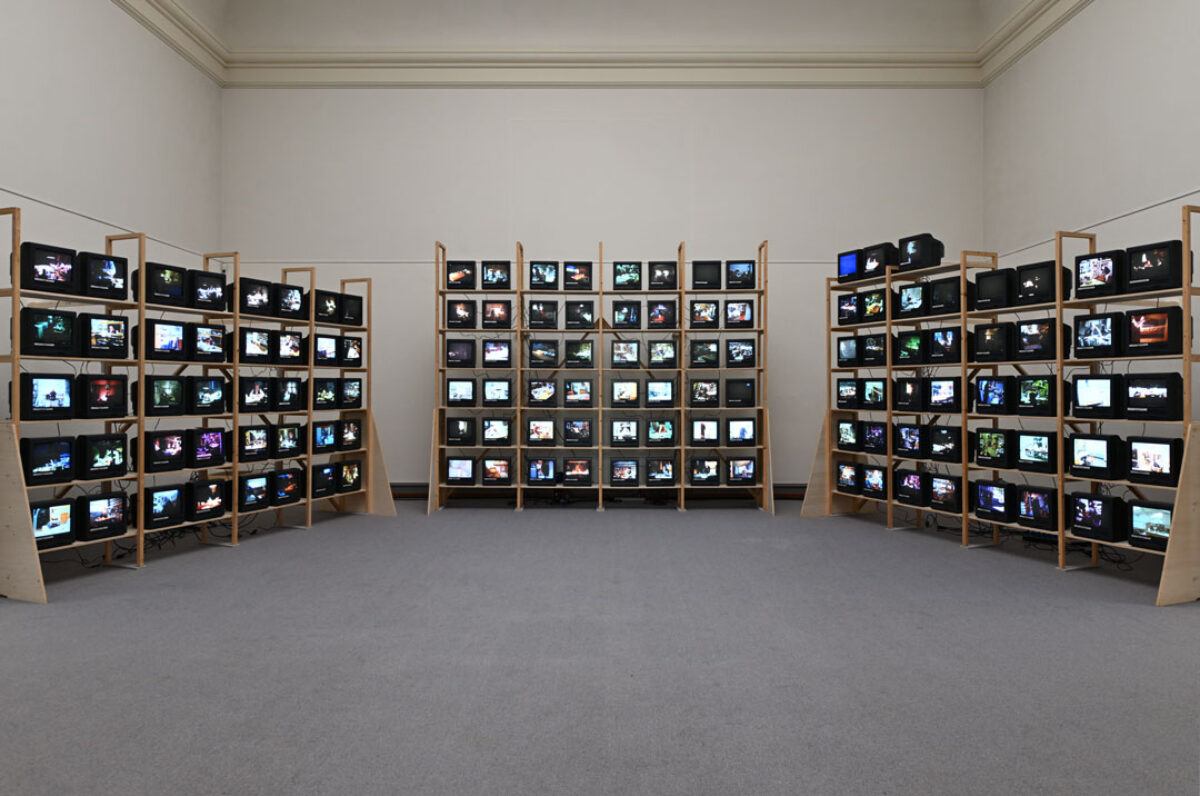 i
i
Video in der Kunst
18.1.–17.5.26, Kunstmuseum Solothurn
Dieter Roth (1930-1998), Solo Szenen, 1997-1998
Foto: Sebastian Verdon
‘Preserving media artworks poses a particular challenge for institutions, one that we can only meet thanks to our collaboration with Videocompany. We couldn’t do it on our own.’
Katrin Steffen, Director of the Kunstmuseum Solothurn
The same applies to the exhibition, which owes its density and quality to the cooperation of all those involved. ‘The cooperation was characterised by exceptional openness and a genuine sense of community,’ says Tuula Rasmussen, research assistant at the Kunstmuseum Solothurn and co-curator. She continues:
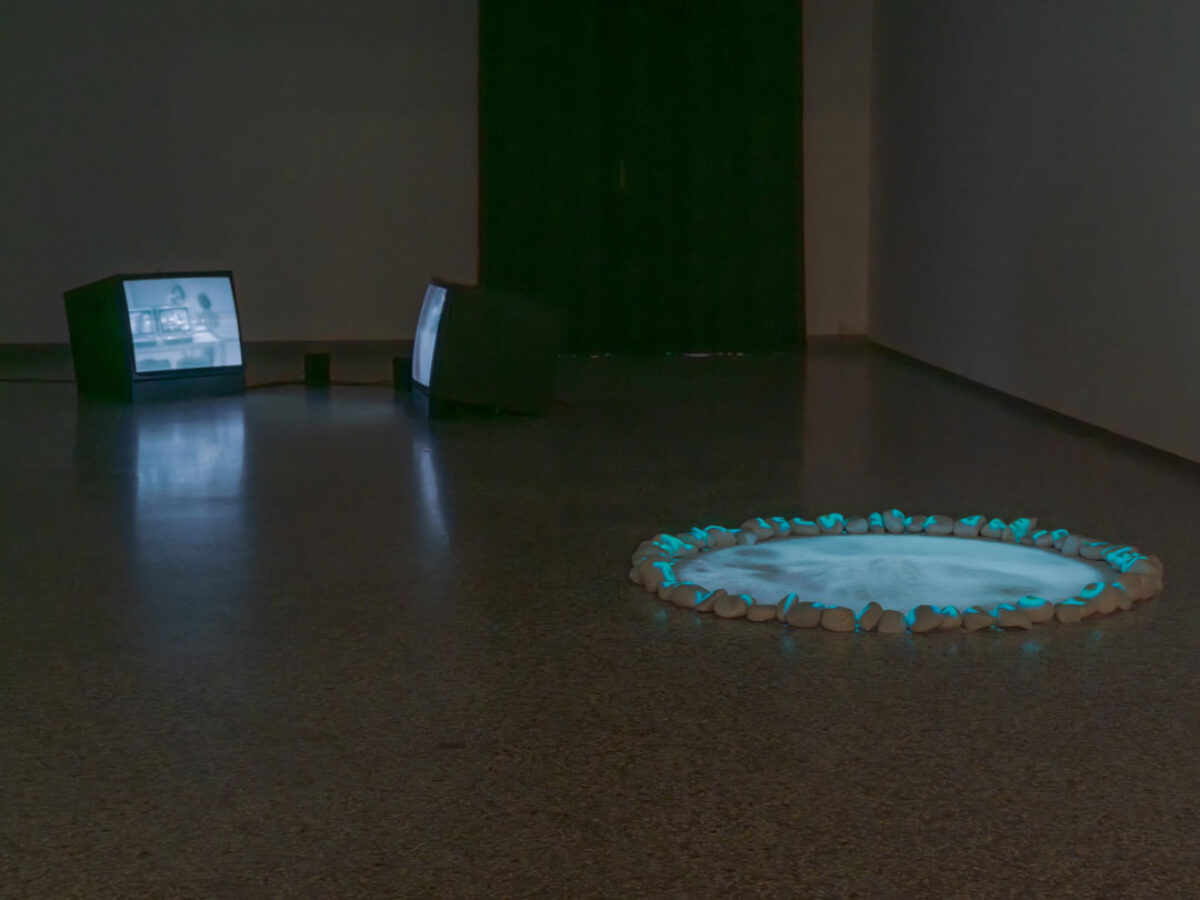 i
i
Video in der Kunst
18.1.–17.5.26, Kunstmuseum Solothurn
Foto: Sebastian Verdon
‘The curatorial process brought together a range of different areas of expertise. That was where the great potential lay.’
Tuula Rasmussen, Research Assistant, Kunstmuseum Solothurn
Simona Ciuccio, Head of Collections & Exhibitions at the Aargauer Kunsthaus, Deputy Director and Co-Curator, is also ‘incredibly pleased’ with the collaboration within the curatorial team.
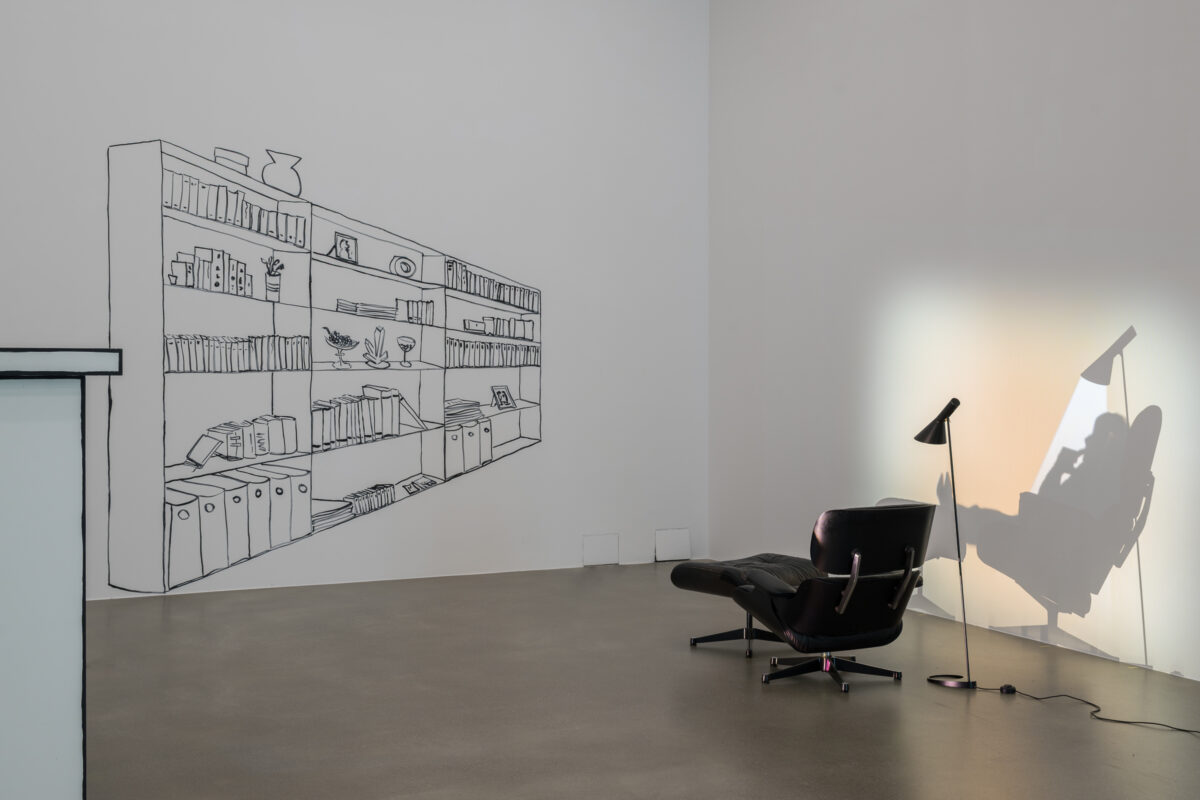 i
i
Video in der Kunst
31.1. – 25.5.2026, Aargauer Kunsthaus
Zilla Leutenegger (*1968), Library, 2007
Foto: ullmann.photography
‘It’s remarkable that museums don’t see each other as competitors.’
Simona Ciuccio, Head of Collections + Exhibitions, Aargauer Kunsthaus
The desire to show off this wealth of art ultimately led to the success of the joint project. ‘Of course, it was a little strange to co-open the exhibition in Solothurn while we were still in the middle of setting it up,’ she admits. Nevertheless, the staggered opening, which took place in Solothurn on the weekend before the film festival, was the right decision. The boundary between video art and film is fluid.
Whether Goethe ever shouted ‘More light!’ is secondary. But whether the title of the exhibition has a double meaning, implying that video art is in decline, remains open. If so, the exhibition would mark the spectacular end of a short but eventful era.
Text: Vanessa Simili